Q. I should ask, have you still got that first Roland Garros trophy? And what about your other majors and where are they? I asked this question because speaking with so many of your contemporaries like Chrissie (Evert), Stefan, and others, they said rarely are any on display. Most of them are in boxes. Jim Courier said the same thing to me. What about yourself?
MATS WILANDER: I think three of my major singles titles trophies are at the International Tennis Hall of Fame in Newport, which I'm very happy with, and then the other four that I have, I have them on display. I have a big office on top of a three car garage that the whole room is mine, and I have my little office up there, and I have all my trophies displayed, and I never ever look at them.
But they are displayed, and rather than have them in boxes, I realized when I moved to Idaho and we had a lot of space, suddenly I took them out and displayed them all. It does happen that I walk around and sort of try to remember, oh, where is this trophy from? But it's just there for, yeah, it's there for my kids to see, and maybe when I'm not here, they might keep one or two around. Who knows?
Q. That's really nice. What was the greater deal for you, being No.1 or winning majors?
MATS WILANDER: Oh, winning majors was way more, way more important than being World No.1 to me. I think World No.1 was never a goal of mine. I think it became a goal after I won the Australian Open in 1988 against Pat Cash in five sets. I'd lost three big finals and two majors the year before to Lendl, and I felt like I was getting a little bit closer to it.
And then I won the French Open in 1988, and then I was really close, and I realise the way things shape up, that this could happen if I win Cincinnati and the US Open, so it's on my racquet to become World No.1. And of course I was lucky enough to have that happen.
But before then, I was never feeling like I was No. 2 in the world and extremely close to being No.1, so it wasn't really one of my bigger goals. To me, a Grand Slam tournament is the same as a world championship, and we have four of them every year in tennis and of course you've got the Olympics. If you can win one of those, I feel like you're the world champion for those two weeks on that surface.
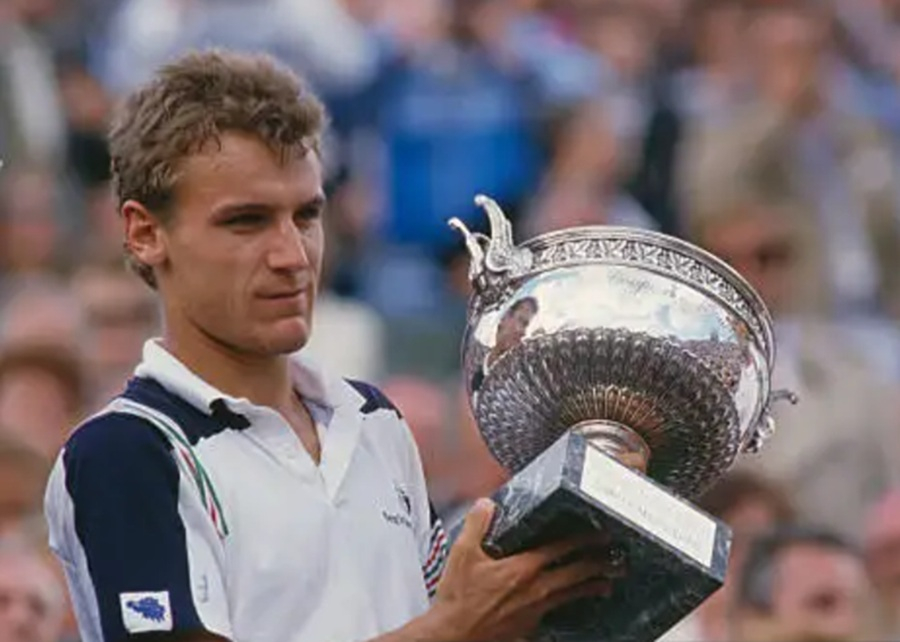
Q. At the very start you mentioned your wife, Sonya. 2027 will be your 40th wedding anniversary. She's had to put up with you for quite a while, eh?
MATS WILANDER: Well, you know, I travelled since I turned pro when I was 16 years old, and I reckon I travelled eight months of the year from the age of 16 to probably the age of 40, because after I finished my stint on the ATP Tour, I started playing on the senior tour or the Champions Tour, the ATP Champions Tour, and I take that pretty extensively.
I think that's why the marriage is holding on. We really haven't really spent 40 years together, but it's more like half of that time, and I think that's very healthy for our marriage.
Q. Your four kids, Emma, Erik, Oskar, Karl, didn't follow in your footsteps. Were you in one sense happy about that, or would you like to have seen at least one of them carry on the Wilander legacy?
MATS WILANDER: Well, my one son Karl, he's my oldest son, he actually eventually stopped playing ice hockey, stopped playing soccer, to pursue tennis for a little bit. He played in Division III in college for a couple of years, and then he hung it up. He's teaching tennis half time as of today. So, he still loves the sport but maybe didn't have that same competitive edge as me, I'm not sure.
In a way, following in my footsteps, because I really grew up playing ice hockey. Ice hockey was the first sport that I played, and soccer was the second sport. Then tennis came along at a very young age still. So, all my kids pursued ice hockey.
That was a goal of mine, and it wasn't voluntary. I pushed them very hard. You have to learn how to ice skate. You are half Swedish. If you don't know how to play ice hockey and ice skate, you really are not half Swedish anymore.
Q. That's too funny. Erik has health challenges, right? What is the issue? For yourself as a father, how difficult is it to deal with and cope with something that Erik is going through?
MATS WILANDER: So, my son Erik has a genetic disease called epidermal bullosa. They call them butterfly children because their skin, it affects their skin, and it's so fragile that you just squeeze them or if you rub against them, they get blisters and the skin can swell up and they get bad blood blisters. We realized when our son Erik was really, really young that he had something going on.
It was very tough to deal with early on, because we didn't know what the long term prognosis was. Obviously, he was in a very bad shape and could hardly walk at all most days, until we moved out to Sun Valley, Idaho, and the air is cooler and drier, and that has changed his life by probably 75%.
He's a very happy man today. He can play golf, he can play ice hockey, and he can go alpine skiing. Not all the time, but when he can or wants to. So, it's easier to deal with today. But when he was little, it was tough, and it took away a lot of my focus on my tennis game. Even though I was playing on the Champions Tour, the senior tour, still you want to win, you want to practice, you want to be fit. Yes, it took away a lot of my attention.
I've learned a lot from him, obviously, being so tough and enduring all the pain and all the blisters and all the days when he can't walk at all. He's literally my hero. I think we all have our heroes, and he's so close by that he has become my hero, that's for sure.
Q. That's pretty amazing. I guess something like that, when you have to experience something like that, it puts in perspective the wins or the down periods, you know, you went through during your playing career, downer issues. So, as I said, I guess it puts things into perspective.
MATS WILANDER: Yeah, it absolutely does. I mean, I wish that I had that perspective, honestly, when I was playing and realized how fortunate I was to be able to win so much at such a young age.
But it's helped me now. Things are very much in perspective these days. Every time I hang out with him or see his feet or his hands I do realize. But obviously there are so many people that are going through such tough times, whether you're born with something that's not very healthy or it's something that happens along the way. I mean, these people are heroes. They are legends, because they're enduring so much pain.
Really, for my son Erik there's no cure in sight. You have to live with that and know that this is not going to change that much. That's really tough. So yeah, I'm very, very blessed and lucky to be basically 100% healthy and have been for my whole life.
Q. Looking ahead, to follow up with your other career as a broadcaster, as a commentator, how enjoyable is that for you?
MATS WILANDER: Oh, it's been unbelievable. I mean, first of all, I've done it now for about 25 years, maybe a few years less than that, I forget. But I was also so lucky because I basically started at the same time as Roger Federer started winning. That's when I started working as a reporter, journalist, or TV commentator. And I think I realized this guy is very special, I'd like to follow him and see how his career pans out.
Little did I know that then Carlos Alcaraz comes along, and I told myself the same thing. I'm, like, I want to keep going with this. This guy is unbelievable. He's doing things to our sport that hasn't been done since Roger Federer did it, which puts tennis on the global map in terms of sports and in terms of the athleticism that these guys are showing. It's absolutely incredible.
So, to be part of that, first of all, it's unbelievably lucky. I love being really close to the players and having some idea of their personality and doing exactly what you're doing, Craig, interviewing them and you realize who's talkative, who's not talkative, when are they talkative, what comes out of their mouth, does it relate to the way they play, that's very interesting.
Commentating a tennis match is very interesting because that's as close, in a feeling, as I can get to actually playing myself. Because I'm trying to put myself in both players' shoes of what would I do if I was this player, what would I then do if I was the other player.
You make a lot of choices. And a lot of them are wrong when you're a commentator, but at least you're making the choices. You're a genius to half of the population is what I usually say.
Q. You always been a pretty mellow guy for as long as I’ve known you, but as a commentator, and as somebody who has made comments about players or the sport, you've been outspoken at times, haven't you?
MATS WILANDER: Yeah, I think that I've realized that we have obviously you're part of the media, as well and I think we all have our different responsibilities. And I do think when you have played the game, I think it's really important that we all speak the truth. Whether you have played the game or you haven't played the game, whether you cover tennis all the time or you don't cover tennis all the time, I think it's very important that we speak our mind and we speak the truth the way we see it.
And I've seen it through my tennis eyes, and sometimes some players have not made me that happy, and I'm only looking at improving our game, our beautiful game of tennis.
I'd like to see the level get better and better and better and I'd like to see the behavior of players, of them being the great ambassadors that they are, I'd like them to be as positive as possible and have as many people start playing tennis as possible. That's really the goal for me as a journalist is to spread the love I have for the sport.
And sometimes you say things that maybe you regret I don't regret any of the things that I say because I say them because I believe them. But sometimes maybe you use the wrong words and do upset some players or agents, but I've got to speak the truth the way I see it, and I'm going to keep doing that until nobody wants to listen to me anymore, Craig.
Q. Do you play much now?
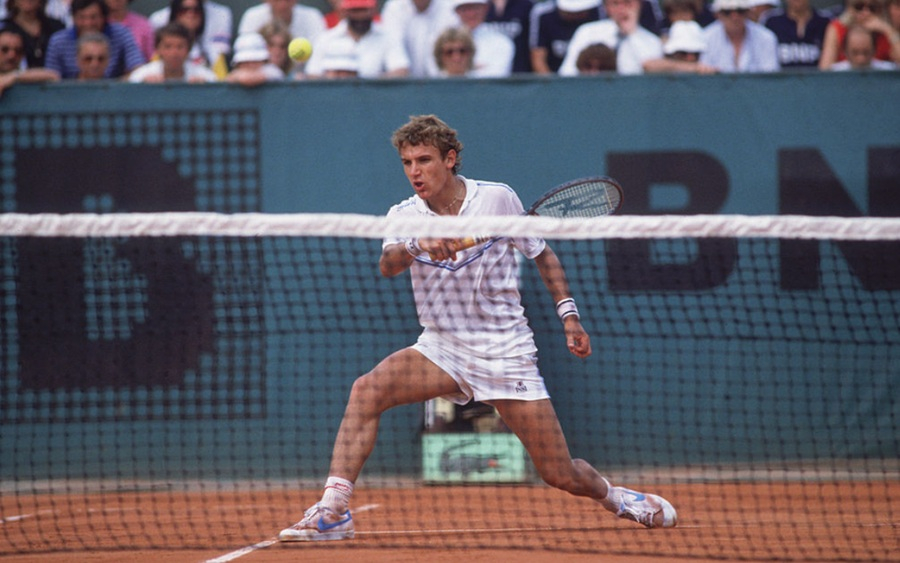
MATS WILANDER: I play tennis all the time. I teach between about 10 and 15 hours of tennis Monday through Friday, and I teach anywhere from a 9 year old to a 75 year old. Sometimes I do group clinics. I sometimes travel around in America and do clinics. I used to do something called Wilander on Wheels where I played all the time.
I have kept it up. So, I realised that me hitting a tennis ball is something that I can never not do, because for me, it's spiritual in many ways. It's like it's meditation time. I don't think about anything else except hitting that ball or listening to the sound.
I should know by now how to hit a tennis ball, but then I realise that, no, not unless you're trying really hard and you have to think about watching the ball and turning your shoulders and all these things.
It's really cool, because I do know so much about it, and I do have a level in me that I want to achieve again, which is impossible, but I know how well I can play still. That's the goal.
Q. What a thrill for those people that have a coaching lesson from the great Mats Wilander. I'm envious of something like that. What would you like to see happen in tennis? There's so much negative talk about the sport, whether it's slower courts or whether it's faster balls, or surfaces, all that sort of stuff. But when you think about the sport as a whole, what would you consider you'd like to see happen to make it even greater?
MATS WILANDER: Well, I think I would like to see more faces win big tournaments. I think that's the thing. I think every sport probably needs their superstars, but I think that there could be more than two.
For me, what I would like to see is more contrast in the surface speeds where I don't think that necessarily faster tennis balls will work anymore because they hit the ball so hard and I think the game will become too fast. It doesn't matter how slow the courts are. If you have fast tennis balls, tennis is not going to have any rallies whatsoever.
But I think you can speed up the courts and you have to choose to play different styles. I would love to see Jannik Sinner have to come to the net at least 50% of the rallies that he plays in the match. Just like we had to do when I played on the grass court at Wimbledon, you had to come to the net, whether you liked it or not. There was no other way of winning or doing well.
So, I'd like to see that. And I think the only way to achieve that is to have one part of the season on very fast courts or maybe the indoors are a little bit faster than they are these days. Maybe the hard courts are faster. I'm not really sure.
Obviously, Wimbledon has become very slow, and Wimbledon is often what people look at. So whatever kind of rallies you have at Wimbledon, those are the kind of rallies that people want to see, I think, when they are going to watch a tennis match.
Wimbledon slowing their grass down and the courts and the tennis balls, I think it's great for Wimbledon but not necessarily that great overall for our game. I'd love to see a little bit more of a contrast of styles.
Q. My last question is: Would you change anything in your life?
MATS WILANDER: I would change my golf swing, Craig. Playing golf at Albert Park in Melbourne during the 1983 Australian Open, I picked up the club and played left handed, which is a two handed backhand for me, and I wish I didn't do that. It felt right, my backhand was good, but I realized the older I get, I wish I was playing from the other side. People have told me that too. That would be the only thing I'd like to change in my life, to be honest.
Q. That's too funny. This has been an absolute pleasure. I mean, it's a privilege talking to you guys. You know, I feel as if I grew up when you guys were growing up. There's that wonderful connection. And I think a lot of the people in the sport now, whether it's media, whether it's people that are organizing, whatever, I think they have missed out on so much of not experiencing that era and the likes of yourself. I think, in my view, the sport is colder than it used to be. If I had to change something, I wish that could be changed.
MATS WILANDER: Yeah, there's something to what you're saying, Craig. I think it has to do with I think, you know, personalities was something that sort of became new with Ilie Nastase; was the first one that sort of went outside the rules of gentleman tennis. Then Jimmy Connors comes along and then McEnroe, so I think we had those personality differences.
And I think that, yes, I kind of agree that it's gotten a little colder, and I think because it's more professional. There are more people around the players, they have less chance to hang out with each other, you have less chance to see them out at a restaurant or whatever. Because of social media, they're so well known, it's tough to move around, it's tough to make a move, because someone makes a comment.
I think players have most probably, they learn how to shut down a little bit, because it's a necessity to not be out there all the time, whereas for us, we didn't have cellphones or social media. The blinking light was on your telephone at the hotel room, and that's how you knew there was a message waiting for you. That was the extent of it.
More information about
Players






 Tennis Legends
Tennis Legends


Mats WILANDER


Jimmy CONNORS


Ilie NASTASE

John McENROE

Chris EVERT


Ivan LENDL

Jim COURIER