Q. Craig, I wanted to start by asking or suggesting to you that this has been one heck of a ride for you with your career from when you first arrived in Australia. Does it feel as long as it has been? You have been here 20 years or so.
CRAIG TILEY: 20 years. No, not at all. You know, from a leadership perspective, I have always looked to tomorrow and never looked at yesterday. I've always believed that you've got to learn from the past in order to move forward into the future and you've got to respect it. I do have a great love and respect for this game, so that always will be at the core of decisions I make as I continue to be in tennis.
I sat here talking about what I think the next five years should look like, from a fan's experience what 2030 will be and from a player experience what that should be. I'm always looking to the future. As a consequence, I don't think I ever considered the past ‑ I mean, 20 has gone by very quickly, but I do remember at the beginning when it was just a tennis tournament. You know, even participation of kids weren't allowed on court. There was no festivalization of it.
I looked around and said this is great, what has been created so far is great, but it just needs to go to another level. I look back now, probably the one criticism I have is we should have done that quicker. But it's not that straightforward. It's easy to say now.
Q. Could you imagine how it's developed across the last 20 years of your reign?
CRAIG TILEY: Well, I'm proud of the fact that as an event, and I said this the last couple years, as an event we are no longer the fourth cousin amongst the slams. We have more people coming through the gate, we have more people watch, we've really taken advantage of the Asia‑Pacific region. So in your five major areas of Japan and Korea, China, India, and Southeast Asia, those five, we draw a lot of interest.
The brand "AO" has been become synonymous with tennis and with the Australian Open. And now everyone comes. It's just natural. It wasn't long ago, as you know well, players weren't coming to the Australian Open. So that's completely transformed that. But I look at it as we just, we're on the surface, just the surface, there is so much more to do.
I'd love this whole precinct to extend across the railroad lines, across the street, be covered with a translucent cover that you can see through it and you can see on top of it, and fans can feel completely environmentally and acclimatized and protected.
So, I mean, looking into the future, how it's completely self‑sustainable when it comes to power, water, energy, and waste. Look, all of that is going to happen in the future, and it needs to happen sooner than we'd like it to.
Q. Almost what you're talking about is like a new mini city.
CRAIG TILEY: 100%. You said it right. This should be a sport and entertainment city. It's a precinct. Someone asked me the other day, I said the whole city should be it. You know, why not? Why not during January ‑‑ in Melbourne you've got other events. You've got Formula 1 and we've got the AFL Grand Final, we've got the horse races, cricket.
And tennis is truly global. It's, together with soccer, the two global sports in every country in the world, and so how do we take better advantage of that? We are slowly getting there, but there are some things I think we can do to really speed that up.
Q. Have there been times when you may have felt you have bitten off more than you can chew?
CRAIG TILEY: Not really, because I don't have a problem asking for forgiveness. (Laughter.) No, look, I do like to stretch things. I do like to stick something big out there and see if it's going to work. I don't mind saying, Sorry, that didn't work and we gave it a good go. And I hope I give our team the license to take some big risks.
Q. What would you say, as you look back and even now, has been the most satisfying for you?
CRAIG TILEY: I think there are so many great moments we continue to have. It was a great opening ceremony. We did the 1 Point Slam. That will become historic as we move into next year and beyond.
How we've treated the players, how we've treated the fans, the type of environment, like we added, for example, the beauty and wellness pillar. We did it in partnership with Mecca (Australian cosmetic company). When we first went down that journey, it would have been easy to pick a big global company out of New York to do this partnership with, but we couldn't find anyone better in the world with someone like Mecca to go and to activate together.
As it's turning out, it's going to be a magnificent partnership. Yeah, so I think it's been more about the player and the fan experience, and our team and the team having the license to idea creation and bring it to fruition, bring it to the fan.
Q. You mentioned the 1 Point Slam and the inaugural opening ceremony. It has been, I would think in all the years I have been coming here, and I think I'm at about 45, 47 Australian Opens, the most phenomenal opening week. It has been diabolical with the fans, with the players, the 1 Point Slam, the opening, everything. I mean, even if nothing else happens, that's a success.
CRAIG TILEY: Well, thank you for saying that. As a team, I was very proud of the team's effort in doing that. But I think you're right. I have said, and I will say this, the opening week in the future will be the most attended. It will be the biggest week, because we will continue to build on the content and the offering for fans, and I want to extend it to even earlier than when we start.
I think it's just the beginning of this big three‑week festival of music and food, and kids and family, and beauty and wellness, and gaming. The month of January can be owned globally by Australia, and at the core of it is tennis, this great game. That's at the core.
Yeah, we are just beginning to touch the surface. What an emotional moment, the opening ceremony, the 1 Point 1 Million‑Dollar Slam. Right afterwards I said to the team, “Well, that was great. How do we make it bigger?” And here are some ideas.
So, I think we will see more of that. But it has been a phenomenal week. When I woke up and started the van, oh, jeez, we've just finished, but now we're going to start (laughter). You probably felt the same way, because you worked the same intensity this week. Normally you kind of slowly breeze into it.
Q. This, I'm thinking, and I don't have actual facts, has to be the richest and biggest sporting event in the country. When you look at attendance, as well, it will probably be in excess of 1.3 million (attendance was in fact 1.368 million) for the two‑and‑a‑half, three weeks?
CRAIG TILEY: I'm proud of the fact that it is the biggest sporting event, and ‑‑ it's the biggest annual sporting event in the southern hemisphere, biggest sporting event in the month of January globally, biggest sporting event in Australia, by a long way, in every metric that you take.
We don't give our own metrics. We give metrics that others measure, because you can always recreate the narrative if you give your own metrics.
So I'm excited by how this can further grow, and the impact we can have on the economy in not just Australia, not just Melbourne but also in Australia, but also the biggest thing people forget is the sign on the court that says "Melbourne," and over 2 billion people around the world that see that and see that for 20, 40 minutes over the month of January. And then the stories that they hear through the commentary and things you talk about about Australia; you can't buy that kind of exposure.
Q. Craig, what about you? Are you somebody who is really strong on the mindset? Like it's difficult ‑‑ I don't really want to use the word “dictatorial.” That's not what I'm getting at. But when people are heading major organizations, whether it's financial or sporting or whatever, it's like almost tunnel vision.
CRAIG TILEY: I think my values as a leader are humility, collaborative, collaboration, excellence, imagination, so you're constantly creative, and collaborating. So those are values that I live as a leader.
I would hope the team that we work with would say that we are collaborative in our approach. We have a very strong team approach, and I always put the team first in the narrative.
But those sometimes close to me would probably say that I'm headstrong, that if I've got an idea on something and I think it's going to really work is that I'll stick to trying to get that idea to happen, but I'll constantly always challenge and ask the question about how can it be bigger, how can it be better, how can it be stretched, how can it be extended.
And I learned a lot of that from coaching. When you're coaching, you're trying to get an athlete to perform in a certain way, and they may not do what your expectation is, and then you've got to find other ways to influence that outcome.
So, I think at the end of the day, I have also understood that you never get anything done unless you have a good team and good people around you. That's where you should spend all your energy as a leader is making sure you spend a lot of time through the process of getting someone onto the team and the process of evaluating the performance, and if it's not working out, changing it. That's the cornerstone of success in any environment.
Q. I don't think you're really scared to go out on your own and not necessarily follow what the French or Wimbledon or the US Open necessarily want or do.
CRAIG TILEY: Yeah, from a leadership point of view, I don't have any fear of failure. I don't have any fear in trying something ‑‑ I don't have any fear about not making a living or starting from zero again, because, you know, I accept that it's life.
I'm in a role but I definitely don't enjoy the profile or the notoriety, whatever the word is, I don't have the right word, that comes with the job. I much prefer to be incognito in things in getting things done, because that other side comes with scrutiny and people say things about you that are not true, but that kind of comes with the territory, you've got to live with that. That's the part I don't enjoy about it, but you've got to live with that.
But I think generally, yeah, I don't worry when it's tough. Like I was surprised at myself during COVID. It was a tough time, but I was amazingly calm. I slept well. I wasn't stressed (smiling). But I don't know how. And I look back at it now, I'm like, Oh, God, I don't know what happened there.
I think I'm lucky maybe that way is that I don't, you know, compartmentalize stuff, ignore it, put it somewhere else and come back to it, but I don't have a problem with having many balls in the air and not worrying I'm going to drop them all.
Q. Like Andre Agassi said to Roger Federer at the opening ceremony, “Don't fear success”.
CRAIG TILEY: That was a great comment (laughter). That was a great comment. Roger is probably the only one you can say that to.
Q. How ambitious a person are you? Certainly I think we have seen some of that with what you have done with this tournament.
CRAIG TILEY: Yeah, when I look back at coaching, I remember someone, when I first started coaching at the University of Illinois, said, “You'll never have success here because you're in the middle of the cornfield, it's cold weather, players don't come here, so just enjoy being average”.
It was one of the opposing coaches from another school. I thought, I'm going to prove you wrong.
I really enjoyed proving everyone wrong, because in a cold‑weather school in the middle of the cornfields ‑‑ a great school, by the way, the University of Illinois, one of the best in the United States. But it's not a hotbed for tennis.
We made it that. National champion, became the best players. In fact, we had more ranked players there than were ranked in Australia at the time. So I think that was proving someone wrong. When I got to the point that I achieved that, it was, like, okay, what's next, I think. That's when Australia ended up and the Australia journey.
I think I am ambitious about proving things wrong, challenging the status quo, but I'm mostly ambitious about the sport of tennis. It's completely suboptimized.
We have a massive opportunity to be ‑ we are a global sport, but we're not a real global sport. If you asked a fan what's happening in theory, he doesn't really know. If you asked a fan what's the tennis season look like, they don't really know.
They understand the Grand Slams, but they don't understand the rest. And it's just a massive opportunity to have a January‑to‑October or January‑to‑September, whatever it is, season for tennis, have a good offseason where players can fully recover and get a break, and then have a story going into cities and regionally where they are making a lot more money than they make today. I believe 250, 300 players on men's side and the same on the women's side should be making a good living, afford a coach, afford travel, and afford to save enough money in order to live beyond their professional careers.
So, I think we are completely not at that level yet and we are completely suboptimized, and what gets in the way is the current leadership gets in the way more than anything else.
I think that if we can all kind of open up our minds a little bit to what possible could look like ‑‑ we sometimes rest on our laurels, and this is what happened to tennis when I first started here, and I thought we were doing great, and I said, But the gap between how you're doing today and what's possible, it's so big, let's go on the journey to try and close that gap. And I see the same thing with global tennis.
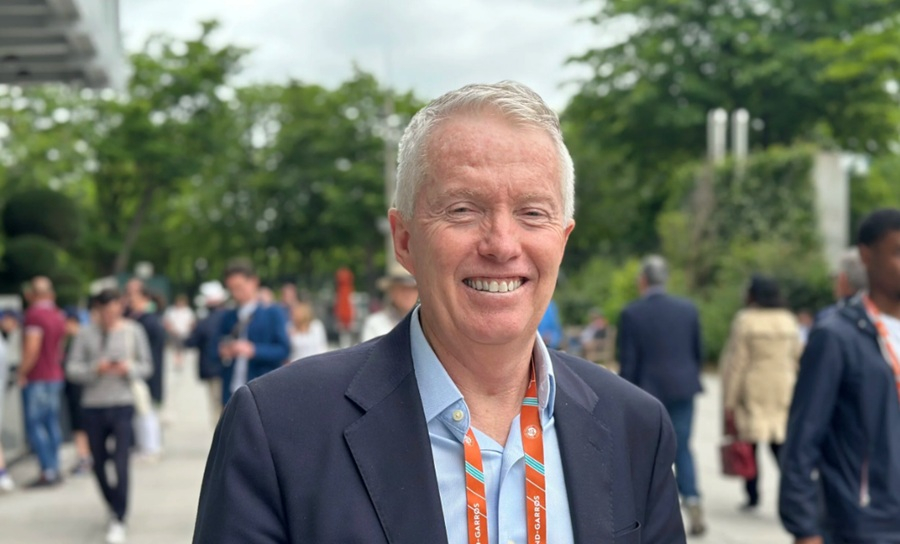
Q. The USTA, all the talk about you possibly going there. What have you got to say on that? And in one sense, is it flattering?
CRAIG TILEY: I will say it's not new, this conversation. It's happened before. It happened in the previous role. There has been a lot of speculation about it, and I just made a conscious decision to not fuel it, not make comment on it or fuel it.
We have just finished, as you mentioned at the beginning, arguably the most successful lead‑in to the event. I still look at that as just touching the surface, and the two weeks of the AO was driven by the performance of the players and the fun of the fans, and I want to completely focus on that.
Q. What's your dream for the Australian Open?
CRAIG TILEY: My dream is for ‑‑ I think we're a long way off of what great looks like, but I unfortunately may always say that that could be stressful for others that are doing a great job.
Our team do a magnificent job. I couldn't be more proud of the work that they do. They're all good people. I think I know most of them by their first name. We have about 750 full-time and about 14,000 working just during the event.
Our Summer Series leading were brilliant. Record crowds for those two weeks and the next three weeks.
My dream for the Australian Open is this thing, its footprint has increased threefold. The fan experience is completely personalized. There's not one Australian or no one in our region that doesn't want to come here.
It becomes a bucket‑list event or bucket‑list experience, and if the players are making a lot of money and are completely satisfied with the role and the voice that they have in the game, there's a little kid that's coming out, running out of the grounds of spending a day here, getting to the nearest place he can to buy a tennis racquet because he wants to have a hit and play this great game.
More information about
 Tennis Legends
Tennis Legends